
Sustainable Cooking
Solar Cookers for Remote Communties
Providing Access to Clean and Reliable Cooking Methods
For millions of families in remote communities worldwide, the simple act of cooking a meal can be fraught with challenges. Access to clean and reliable cooking fuel is a daily struggle. Traditional methods often involve burning firewood, a practice that carries a heavy burden. The fumes produced from burning low-quality fuel also add to the challenges. Thankfully, solar cookers address these challenges by offering a sustainable alternative to conventional ways reliant on firewood or fossil fuels.
Solar cookers harness the power of the sun to cook food safely and efficiently. Implementing solar cooking programs in remote, underserved communities helps reduce deforestation and improve health outcomes. What’s more, solar ovens serve dual purposes of both cooking food and also purifying water, which addresses the pressing issue of access to safe drinking water in rural regions.
Watch the Video Below for a Quick Overview of this Mission
Deforestation Alternative
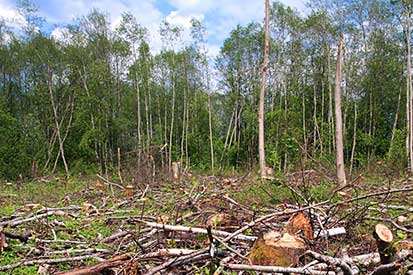
Deforestation is a serious threat to our planet’s health. The adoption of solar cooking mitigates this issue by reducing reliance on firewood, thereby preserving precious forest ecosystems. In regions where deforestation is rampant, solar cookers offer a viable alternative, helping to conserve biodiversity and combat climate change.

Minimizing Health Risks
Minimize Health Risks
Communities that transition to solar cookers can alleviate respiratory ailments and improve overall health outcomes, especially among those who are disproportionately affected.
Community Development
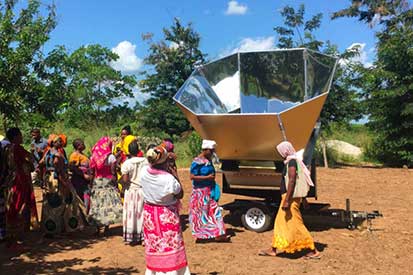
Depletion of local forests due to excessive firewood collection worsens environmental degradation. It contributes to the cycle of poverty in these communities, highlighting the urgent need for sustainable energy solutions to alleviate the burden on women and promote holistic community development.
Solar Cooker Overview
At its core, a solar cooker is a thermal collector that traps the sun’s warmth. Sunlight, a blend of high-frequency visible and ultraviolet rays, strikes a dark surface inside the cooker. This dark surface absorbs and transforms said rays into lower-frequency infrared radiation heat. A transparent cover, usually glass, allows the sunlight to enter but acts like a blanket that keeps the infrared heat inside to create a mini hotbox. Three types of solar cookers are available: box cookers, panel cookers, and parabolic reflector cookers.
Box Cookers
Also known as solar ovens, these are perhaps the most common type of solar cooker. They consist of an insulated box with a transparent lid or cover, usually made of glass or plastic, and a dark-colored interior to absorb sunlight. The dimensions of box cookers vary but typically range from small, portable units to larger ones suitable for cooking meals for a family.
These cookers can reach temperatures of around 200°C (400°F), sufficient for baking, roasting, and slow cooking. However, they require clear skies and direct sunlight to function perfectly, plus cooking times can be longer compared to conventional methods. The glass can get hot, so use mitts and keep children at a safe distance.
Panel Cookers
Sometimes called solar panel cookers or solar panel ovens, panel cookers are lightweight and easy to transport, making them popular for camping, picnics, and emergency preparedness. They consist of a reflective panel, usually made of aluminum foil or reflective mylar, attached to a frame that supports a cooking pot or container. The panel reflects sunlight onto the pot, which is usually enclosed in a transparent plastic bag or glass bowl to trap heat. While panel cookers are relatively simple to assemble and use, they are less efficient than box cookers and may not reach as high temperatures. Still, they can simmer and bake at a moderate 100-150°C (200-300°F). Users should also be careful to position the cooker correctly to maximize sunlight exposure and avoid burns from hot surfaces.
Parabolic Reflector Cookers
These powerhouses, shaped like a satellite dish with a wide, reflective surface concentrate sunlight onto a single focal point where a pot is placed. Parabolic cookers can exceed temperatures of 300°C (570°F) very quickly and are, therefore, well-suited for tasks such as frying, grilling, and boiling water.
These cookers are larger, sturdier, and require constant adjustment to track the sun’s movement, which can be challenging for inexperienced users. Also, the concentrated light at the focal point can be extremely intense, so exercise caution during operation. Never look directly at it, and keep flammable materials away.
How Using Solar Cookers Improves Quality of Life
Solar cookers not only offer a sustainable cooking solution but also significantly enhance the quality of life in underserved communities in the following ways:
Deforestation Alternative
When remote families cook using traditional cooking methods that rely on firewood, they’re forced to cut down trees to fuel the flames. This large-scale removal of trees, known as deforestation, disrupts entire ecosystems. Forests play a pivotal role in regulating the climate. Trees are like sponges that soak up harmful carbon dioxide (CO2) to provide clean air and water and maintain biodiversity.
Deforestation exacerbates climate change by shrinking forests’ capacity to sequester CO2, a crucial greenhouse gas. This intensifies global warming and its associated impacts on weather patterns and natural disasters. The delicate balance of nature is further upset as animal habitats disappear and soil loses its nutrients due to erosion. Protecting these ecosystems is vital for the well-being of both the environment and local communities.
Deforestation is a serious threat to our planet’s health. The adoption of solar cooking mitigates this issue by reducing reliance on firewood, thereby preserving precious forest ecosystems. In regions where deforestation is rampant, solar cookers offer a viable alternative, helping to conserve biodiversity and combat climate change.
Minimize Health Risks
Traditional cooking methods, such as open fires or rudimentary stoves, release high levels of indoor air pollutants such as carbon monoxide, particulate matter, and volatile organic compounds. Prolonged exposure to these toxins can lead to health issues such as chronic bronchitis, pneumonia, and lung cancer.
Women and children who spend a lot of time in poorly ventilated kitchens are particularly vulnerable to developing respiratory problems, which exacerbates existing health disparities in affected communities. In severe cases, long-term exposure can even contribute to chronic obstructive pulmonary disease (COPD), a debilitating lung condition.
Communities that transition to solar cookers can alleviate respiratory ailments and improve overall health outcomes, especially among those who are disproportionately affected.
Reduce the Dependency on Firewood
In remote and underserved communities, women often shoulder the burden of gathering firewood. This physically demanding and time-consuming chore takes them away from important opportunities for education, income generation, and community involvement. The visible strain of carrying heavy loads of wood increases the risk of falls or leads to musculoskeletal injuries, spinal problems, chronic poor posture, etc.
Note that, the depletion of local forests due to excessive firewood collection worsens environmental degradation. It contributes to the cycle of poverty in these communities, highlighting the urgent need for sustainable energy solutions to alleviate the burden on women and promote holistic community development.
The use of solar cookers diminishes the demand for firewood, easing the burden of women who typically bear the responsibility of gathering fuel. It saves time and also lessens physical strain on women, enabling them to pursue other activities for personal growth and economic development.
Additional Benefits of Using Solar Cookers
In addition to cooking, solar ovens offer other versatile applications such as water pasteurization, sterilization of medical equipment, and food dehydration.
Water Pasteurization
Contaminated water harbors harmful microorganisms that can cause serious gastrointestinal illnesses, which, in severe cases, become life-threatening if left untreated. Different organisms have varying heat tolerances. Even so, for safe water pasteurization, reaching a minimum temperature of 160°F (71°C) for at least 15 seconds will destroy most bacteria, viruses, and parasites.
Solar cookers can adequately raise water temperatures high enough to eliminate toxic pathogens and make it safe for drinking without the need for electricity. It’s a cost-effective and sustainable solution for communities lacking access to clean drinking water, particularly in remote or disaster-affected areas.
Medical Equipment Sterilization
Similar to water pasteurization, solar cookers can achieve high temperatures sufficient to kill bacteria and viruses on medical instruments. To effectively sterilize medical equipment, a solar cooker needs to reach and maintain temperatures above 121°C to 160°C (250°F to 320°F) for a specific time.
For this purpose, a parabolic reflector cooker is the best choice. Its concentrated sunlight creates a hotter zone for achieving the necessary sterilization temperatures than a box or panel cooker. This guarantees the safe treatment of patients, especially in remote locations lacking proper sterilization facilities.
Food Dehydration
Solar cookers can gently extract moisture from fruits, vegetables, and even meats simply by using the sun’s heat. Box cookers are typically ideal for food dehydration because of their enclosed design, which provides consistent and controlled heat levels (around 125°F to 160°F) necessary for the dehydration process. The insulation and glazing of box cookers ensure that heat is retained, facilitating gradual moisture evaporation without overheating the food items.
Improving Lives in Underserved Communities with Solar Solutions Collective
The transformative potential of solar cooking in remote and underserved communities cannot be overstated. By tapping into the sun’s abundant energy, we address immediate needs, such as access to clean cooking and safe drinking water.
At Solar Solutions Collective, we appreciate the challenges faced by remote communities and believe that solar cooking offers a powerful tool for positive change. Through strategic partnerships with nonprofits, humanitarian organizations, and clean energy advocates, we promote the widespread adoption of solar cookers as a sustainable solution to societal and environmental challenges.
If your organization is committed to improving the well-being of underserved communities, we invite you to partner with us to develop and implement solar cooking programs tailored to your requirements.